





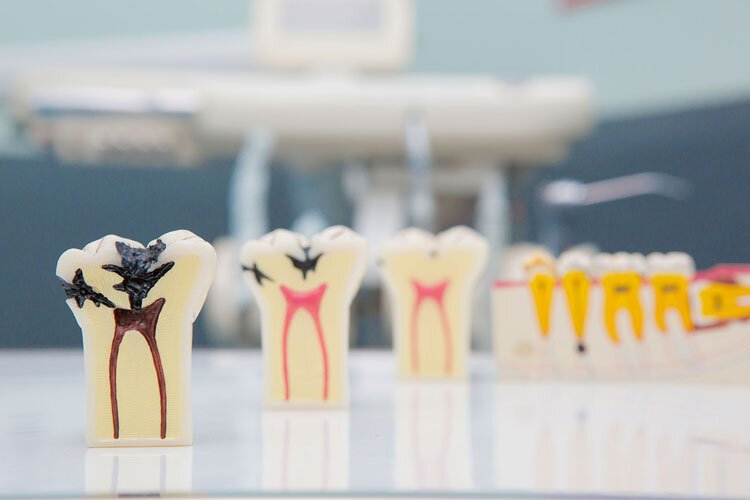
Root canal treatment is one of the most commonly used treatment methods. It is applied in the treatment of diseases caused by the progression of tooth decay and its penetration to the root, involving root cleaning. Root canal treatment aims to repair and save decayed or infected teeth. During root canal treatment, the dental nerves are removed along with the pulp, which is the soft tissue in the middle of the tooth. The tooth is saved by completely cleaning the inside of the tooth and filling the space opened for cleaning.
Content Summary
The decay and inflammation resulting from neglecting dental care can lead to further complications, potentially necessitating root canal treatment. Patients often fear this procedure due to its association with reaching the dental nerve and potential pain. However, with the use of methods such as local anesthesia, general anesthesia, and sedation, root canal treatment can be performed without causing discomfort to the patient.
Root canal Treatment
During root canal treatment, the natural cavity in the hard part of the tooth is cleared, the nerve is extracted, and any inflamed or decayed areas, known as pulp, are thoroughly cleaned. Removing the nerve from the tooth does not compromise its overall health or structure. In fact, eliminating decay and inflammation helps prevent tooth loss.
The nerves removed during root canal treatment are those responsible for sensing hot and cold stimuli, so their absence does not adversely affect daily life. Furthermore, this procedure helps prevent inflammation that may arise in the teeth and gums following treatment.
Why is Root Canal Treatment Necessary?
The natural structure of a tooth can be compromised due to various reasons such as damage to the tooth’s pulp or dental nerve, advanced decay, or a cracked or broken tooth. This often leads to inflammation and infection. When the nerves and pulp inside the tooth are affected, bacteria can enter the root canal, leading to rapid decay.
Root canal treatment is essential in such cases to address the decay and bacteria that have reached the nerve portion of the tooth. During this procedure, the damaged nerve is completely removed, and the area is thoroughly cleaned before being filled. This not only alleviates the pain associated with decay but also prevents further inflammation.
Failure to undergo root canal treatment can exacerbate dental issues, leading to the formation of abscesses in the gums and advanced inflammation. Abscesses can result in severe toothache and, if left untreated, can spread throughout the face. They may even cause swelling around the eyes. Therefore, it is advisable to opt for root canal treatment to preserve the affected tooth rather than resorting to extraction.
Abscesses are seemingly straightforward conditions but can have serious consequences if left untreated. They often stem from tooth decay and swelling in various parts of the mouth. Root canal treatment is a common approach to addressing such conditions, helping to save the affected tooth and prevent further complications.
Duration of Root Canal Treatment
The duration of root canal treatment varies depending on the individual’s treatment needs. Factors such as the extent of decay, the presence of cavities reaching the root, and the presence of infection in the root canals can directly impact the duration of treatment. In such cases, your dentist will provide detailed information about the required treatment and its duration.
Root canal treatment typically takes about one week to complete, depending on the severity of tooth decay and infection, as well as the extent of nerve cleaning. However, this timeframe may be extended or shortened due to additional complications that may arise during treatment. Moreover, in cases where medication is required, regular usage may be necessary for the medication to be effective, further prolonging the treatment process.
Generally, a single session of root canal treatment lasts between 30 minutes and 1.5 to 2 hours. After the procedure, the tooth may be left for approximately one week to allow for the application of medications used during dental cleaning.
In simpler cases, the tooth can be sealed on the same day as the root canal treatment. In other words, the cleaning and sealing of the tooth can be completed in a single session. However, this decision will not be based on your preference but rather on the treatment approach chosen by your dentist. Your dentist will determine the most appropriate course of treatment for your specific needs.
Pain Management During Root Canal Treatment
General anesthesia, local anesthesia, and sedation techniques ensure that patients do not perceive any discomfort during procedures. In such instances, the choice of anesthesia is determined by the dentist.
Post-Treatment Pain: What to Expect?
Although root canal treatment is often perceived as a highly painful and complex procedure by the general public, it is actually considered to be relatively painless, akin to undergoing a routine filling. The discomfort experienced during the treatment is typically minimal compared to the severity of toothaches resulting from inflammation.
Following the procedure, patients may encounter some sensitivity in the treated area, which can be alleviated with over-the-counter pain medication. Typically, this sensitivity subsides swiftly, affirming root canal treatment as a generally painless dental procedure.